EMINENT Project Completed: Demonstrating a Responsible and Scalable Value Chain for Seabed Minerals
The EMINENT project has now been successfully completed, delivering clear evidence that Norway can develop a responsible, knowledge‑based and competitive value chain for seabed minerals.
The EMINENT project (2023–2025) has officially concluded, delivering the most comprehensive knowledge base to date on seabed mineral resources on the Norwegian continental shelf. The project set out to build a solid foundation for a responsible value chain for seabed minerals, supporting the green energy transition, strengthening Norway’s raw‑material preparedness, and enabling new industrial opportunities.
As global demand for critical minerals such as copper, cobalt, and zinc continues to rise, and land‑based deposits become increasingly difficult to extract, seabed minerals represent an important strategic resource for Norway’s future.
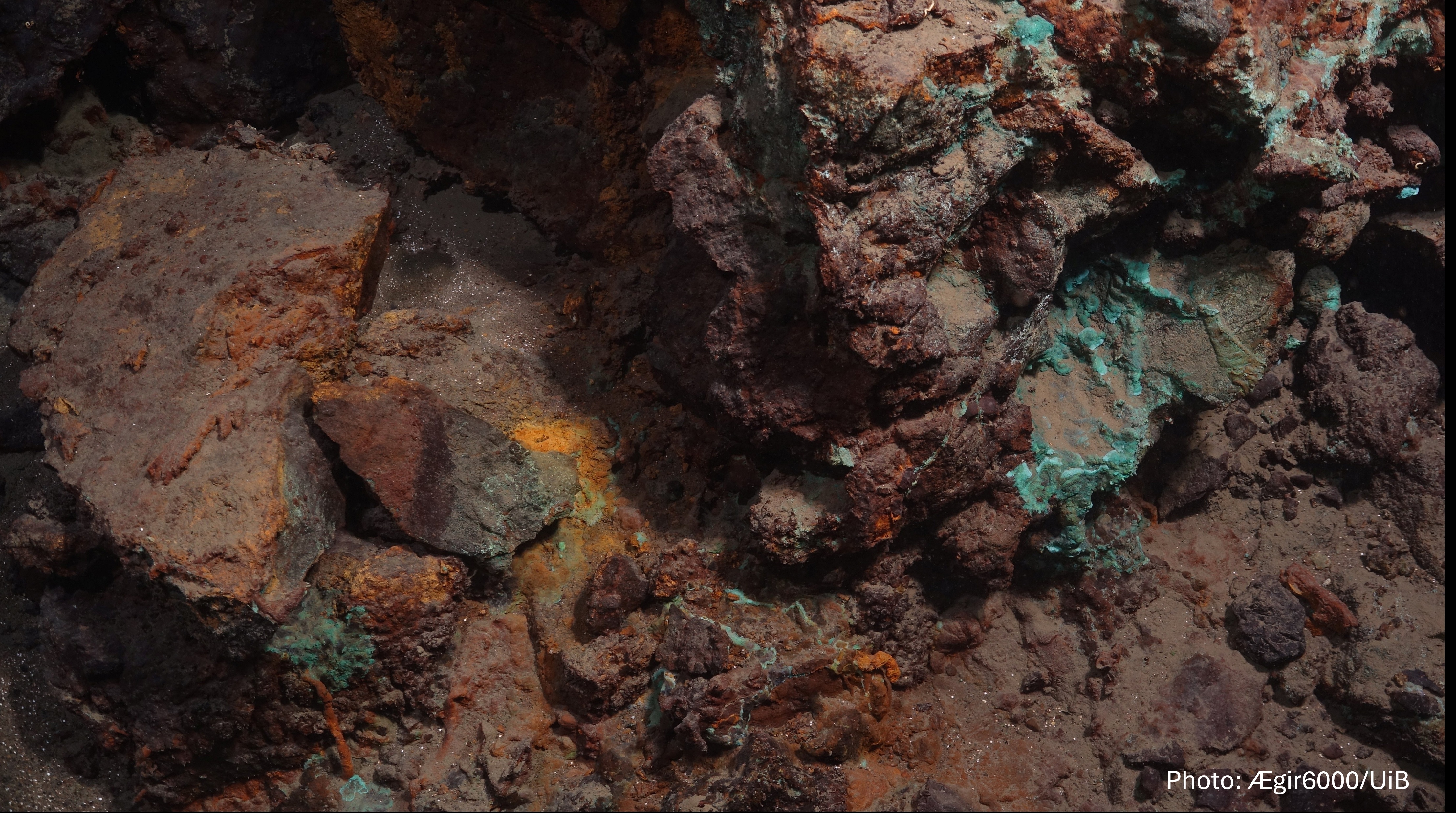
A major breakthrough came in 2023 with the discovery of Deep Insight, the first extinct sulfide system found in the Norwegian Sea. Located at only 1200 meters depth, it revealed substantial resource potential accessible with existing technology. This discovery led to two additional research cruises in 2024 and 2025, which uncovered deposits with even higher mineral grades. Across the three expeditions, the project gathered extensive geological, environmental, biological, and geochemical data, forming a robust basis for evaluating resource potential, environmental impacts, technical feasibility, and profitability.
EMINENT has also demonstrated a full proof of concept for a Norwegian seabed mineral value chain, from exploration and environmental mapping to production concepts and mineral processing. The project’s partners developed and field‑tested several new technologies, including the FlexiCore™ low‑impact drilling system, enabling more accurate sampling at significantly lower cost and disturbance than traditional methods.
Environmental responsibility has been central throughout the project. Non‑invasive tools such as eDNA, AI‑assisted video classification, and high‑resolution mapping have shown how seabed ecosystems can be monitored without physical disturbance. A stepwise exploration framework was developed to integrate environmental data, technological capabilities, risk assessment, and regulatory alignment before any extraction decisions are made. New solutions for closed vertical transport and sediment‑plume management further demonstrate how environmental impacts can be minimized.
Downstream processing studies show that high resource efficiency is achievable through both conventional and low‑carbon, hydrogen‑based metallurgical methods. Early tests of bioleaching indicate strong potential for future improvements in environmental performance, energy use, and cost effectiveness.
Overall, EMINENT concludes that a complete seabed mineral value chain on the Norwegian shelf is technically feasible, environmentally far more responsible than traditional mining, and capable of delivering high value creation based on strong scientific foundations. The project’s results strengthen Norway’s strategic position, support the green transition, and demonstrate how the country could become a future supplier of sustainable minerals in a rapidly changing global market.
“With EMINENT, we set out to build the knowledge base needed to understand both the opportunities and responsibilities tied to seabed minerals. The discoveries and data gathered over these three years show that it is possible to design a value chain that is technologically mature, environmentally responsible, and well‑aligned with Norway’s long‑term strategic interests. We now have a far stronger foundation for informed, transparent decisions about how these resources can support the energy transition.” - Anette Broch Mathisen Tvedt, EMINENT Project Lead